
Therapy with Depth


Designed to uncover and heal the patterns keeping you stuck
EMDR, Ketamine-Assisted and Parts-Work psychotherapy in San Francisco or online
You feel disconnected in relationships, are often avoidant and self-isolate.
I might be the right fit for you if…
Want to parent your children without intergenerational trauma impacting them.
Have a tendency for your intellect to take over, even in instances when it makes sense for emotions to be at the front.
Finding that you have difficulty understanding your emotional reactions.

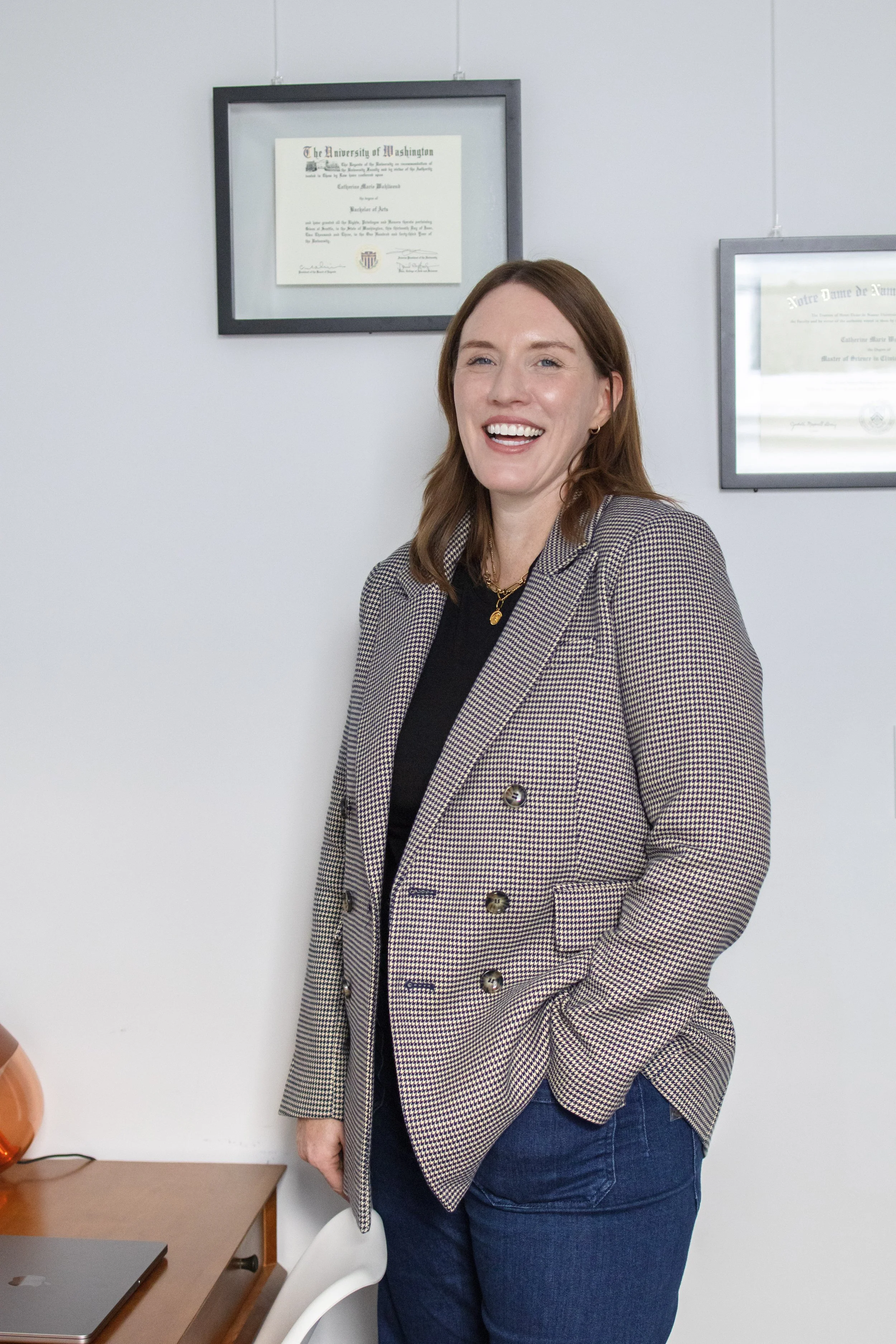
Hi, I’m Catherine.
I’m a licensed therapist in San Francisco.
I specialize in trauma and use EMDR, ketamine-assisted psychotherapy, and parts-work models into my sessions to help make sense of your experience while helping you move forward. I offer both traditional weekly sessions as well as intensives that offer a targeted, depth-oriented approach to your healing.
A large chunk of my training has been devoted to understanding the way that early development impacts the rest of our lives, which has given me a deeper understanding of how to heal early childhood wounds as well as how to support parents in their journey of protecting their own children from the impacts of intergenerational trauma.

In-person and remote options
My office is conveniently located in San Francisco’s Mission District. I also offer teletherapy.
Therapy Services
-

Parents
-

Adults with Emotionally Immature Parents or Childhood Emotional Neglect
-

Chronic/Invisible Illness
-

Relational Trauma & CPTSD

Let me answer that for you real quick…
Frequently Asked Questions
-
This is a common misconception! Therapy is a place where your past is relevant, and given my specialties I cannot deny the truth of how much I believe your past matters. Human adults have had millions of experiences by the time they land in front of a therapist, so to suggest that those experiences don’t matter is hard to justify. It’s true that talking about the past can be painful, but talking about it with a professional who is trained to support this exact kind of difficulty is different than simply talking about it with a friend. Most people find that processing their past can often help them have a better future by working out what went wrong and finding ways to heal, cope and become the person they want to be.
Secondarily, in my sessions we will not talk about your past at the expense of your current distress. If you have immediate problems that require in-the-moment support, we will focus on those first. -
In most cases, I meet with my therapy clients weekly. Consistent meetings are often the most effective way to see change in your life. However, this is not always possible or relevant for all the people I see. This is why I offer intensives as an option, which is a great option to receive quality, trauma-informed care in a way that can work for your schedule.
-
Firstly, while there are no guarantees, these modalities are widely utilized for a variety of issues. I have personally seen the benefits in my office, but you also don’t have to look far to hear about people who have benefited from this treatment. Secondly, this is a great thing for us to talk about on a consultation call. Lastly, both of these methods utilize you, your experience and your nervous system as the gauge for the pace of our work. Your consent to the process is ongoing and doesn’t end once we begin EMDR or an intensive.
-
Therapy varies in length depending on a number of factors. Most people I work with feel changes in their lives after a few months and may reduce the cadence of therapy; some people will stick with therapy for several years because they value or need more consistent support. It’s helpful to keep in mind that many of the problems that draw us to seek therapy have been years or lifetimes in the making, so they may not be resolved as quickly as you might hope. The most important thing to know is that your opinion is the best barometer of your success in therapy; if you feel better, we honor that and will make a plan to end when it feels right for you.
-
It’s true that many therapists have made the switch to Telehealth and it’s hard to deny the convenience of what it can offer. Due to the convenience, I still have many virtual sessions each week, but I also have in-person availability at my office in the Mission District of San Francisco. I am thrilled to be able to connect with clients face-to-face and value this time spent together.
-
If we have already started sessions and you are unsure of something that is happening, you are invited to tell me so. Therapy is a little different than typical social interactions in that you don’t have to worry if you are hurting my feelings or doing something socially unacceptable. Therapy is intended to be a space that you are encouraged to speak what is on your mind. A few things might result from this discussion — we might be able to fix what isn’t going right and improve our therapeutic relationship, which somewhat paradoxically can lead to therapeutic progress: just imagine what it might feel like to express your displeasure in a relationship and then have that person actually validate and attempt to meet your needs? It might be a wholly new experience for you. Or secondly we might decide that you would be better served by another therapist and I would then help support you in finding someone else to work with.
“The truth is, you cannot love yourself unless you have been loved and are loved. The capacity to love cannot be built in isolation.”
― Dr. Bruce D. Perry

Click here to schedule a free consulation call with Catherine.
A relaxed 20-minute call to see if we’re the right fit.